Robot Evolution
Springer · Natural Computing Series · 2026

Robot Evolution: from Evolutionary Robotics to Physical AI

A comprehensive account of how robots can evolve, learn, and adapt, bridging evolutionary computation, embodied intelligence, and the emerging frontier of physical AI. Accompanied by open-source software for experimentation, prototyping, and reproducible research.

Authors
Eiben · Miras · Hart
Pages
12 chapters · 3 parts
Software
ARIEL (open source)
Robot Evolution — book cover Robot Evolution — back cover

If evolution can create intelligence, then artificial evolution can create artificial intelligence.

— The main premise
Two motivational scenarios

Robots that evolve can change everything

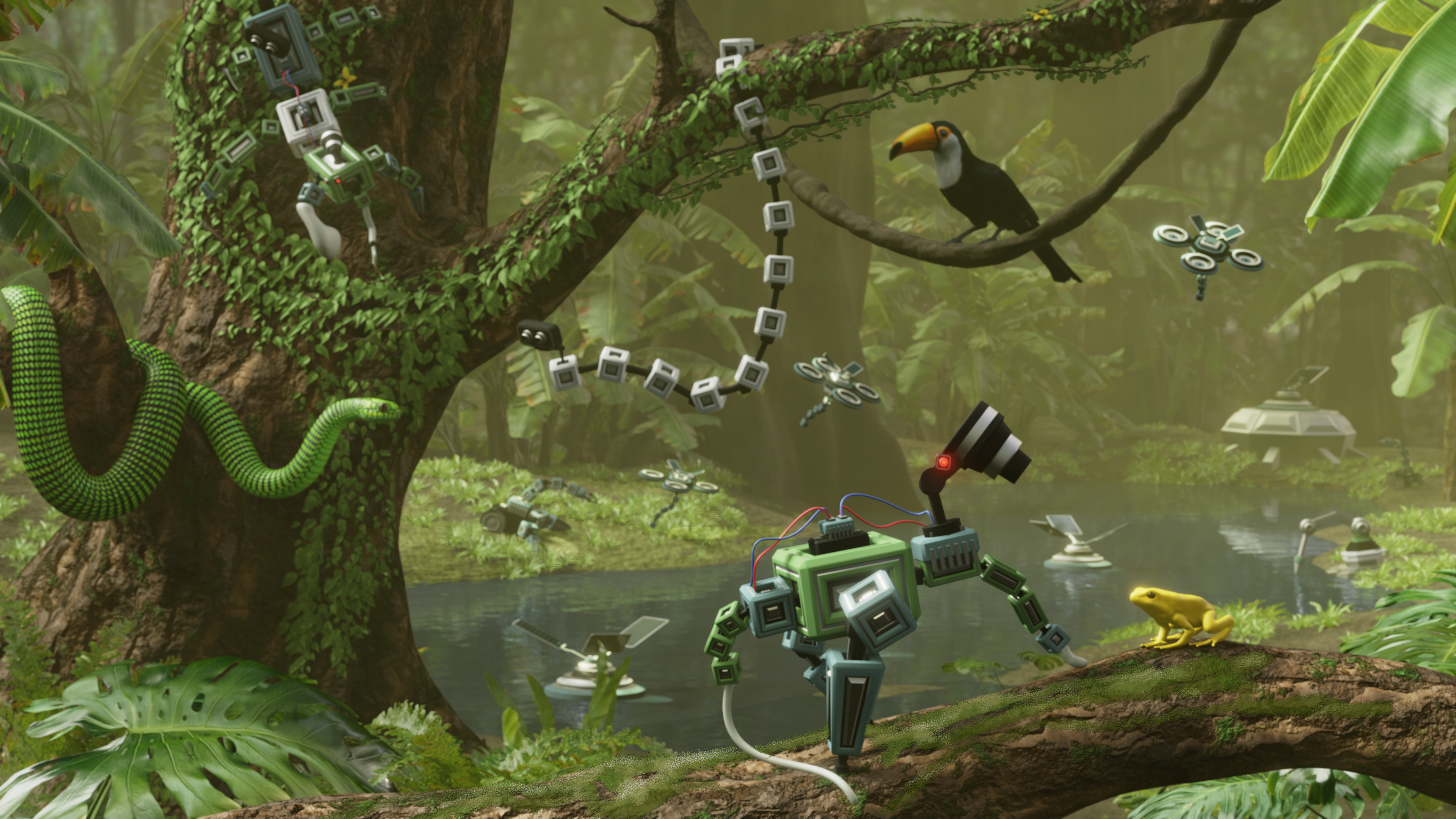
Self-evolving rangers in the jungle
Environmental monotoring

Self-evolving rangers in the jungle

A population of robots is dropped into a remote forest. Bodies and behaviours evolve on-site to map terrain, monitor biodiversity, and adapt to conditions no human engineer ever anticipated.

Learn more
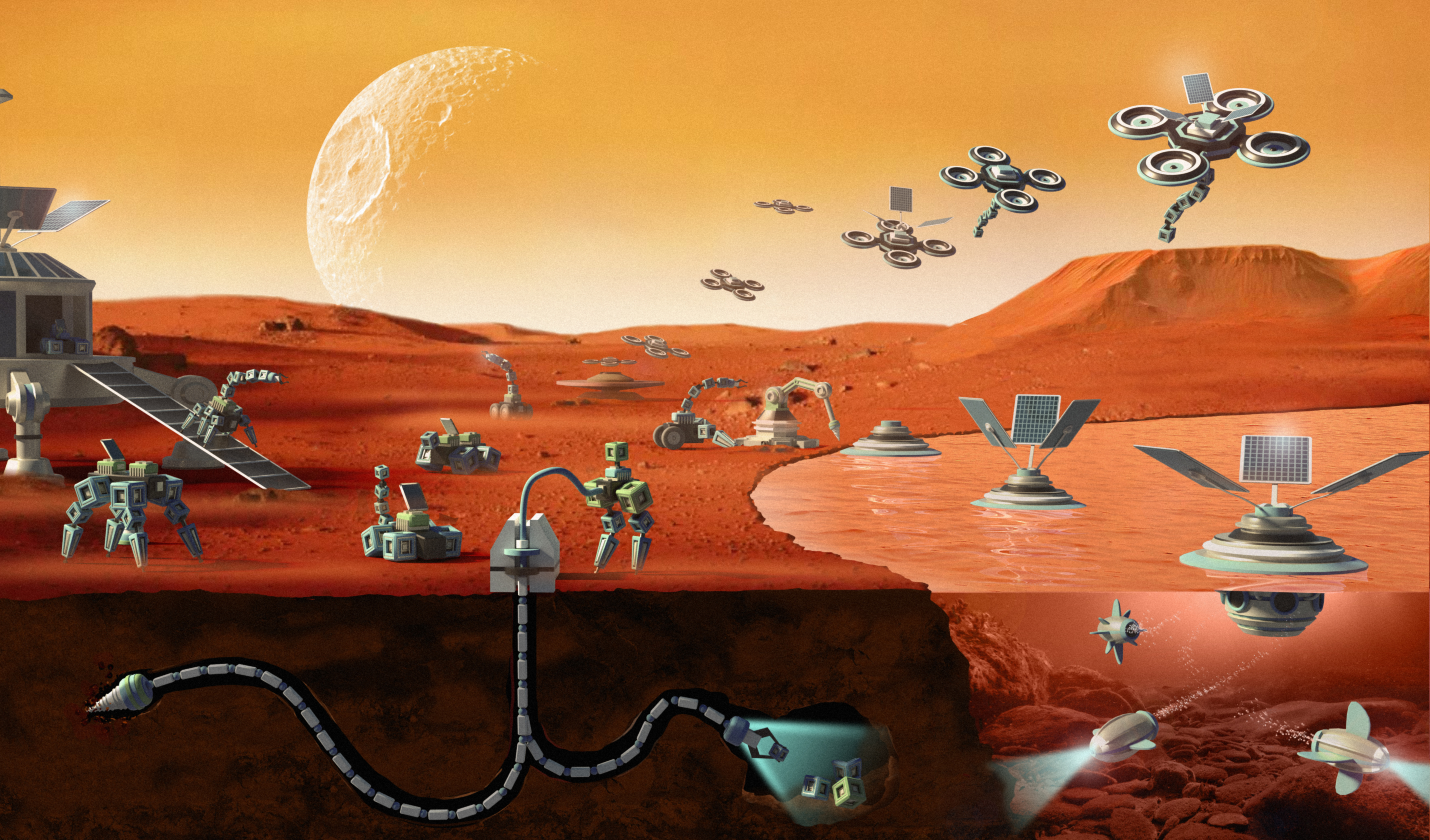
Robot terraforming on Mars
Space exploration

The Terraformers

A colony of self-evolving robots is sent to a hostile, uninhabitable planet. Generation by generation, they become better adapted to the environment until they can not only survive and reproduce, but also manipulate the world to prepare it for human habitation.

Learn more
Trends

At the intersection of three AI revolutions

AI waves

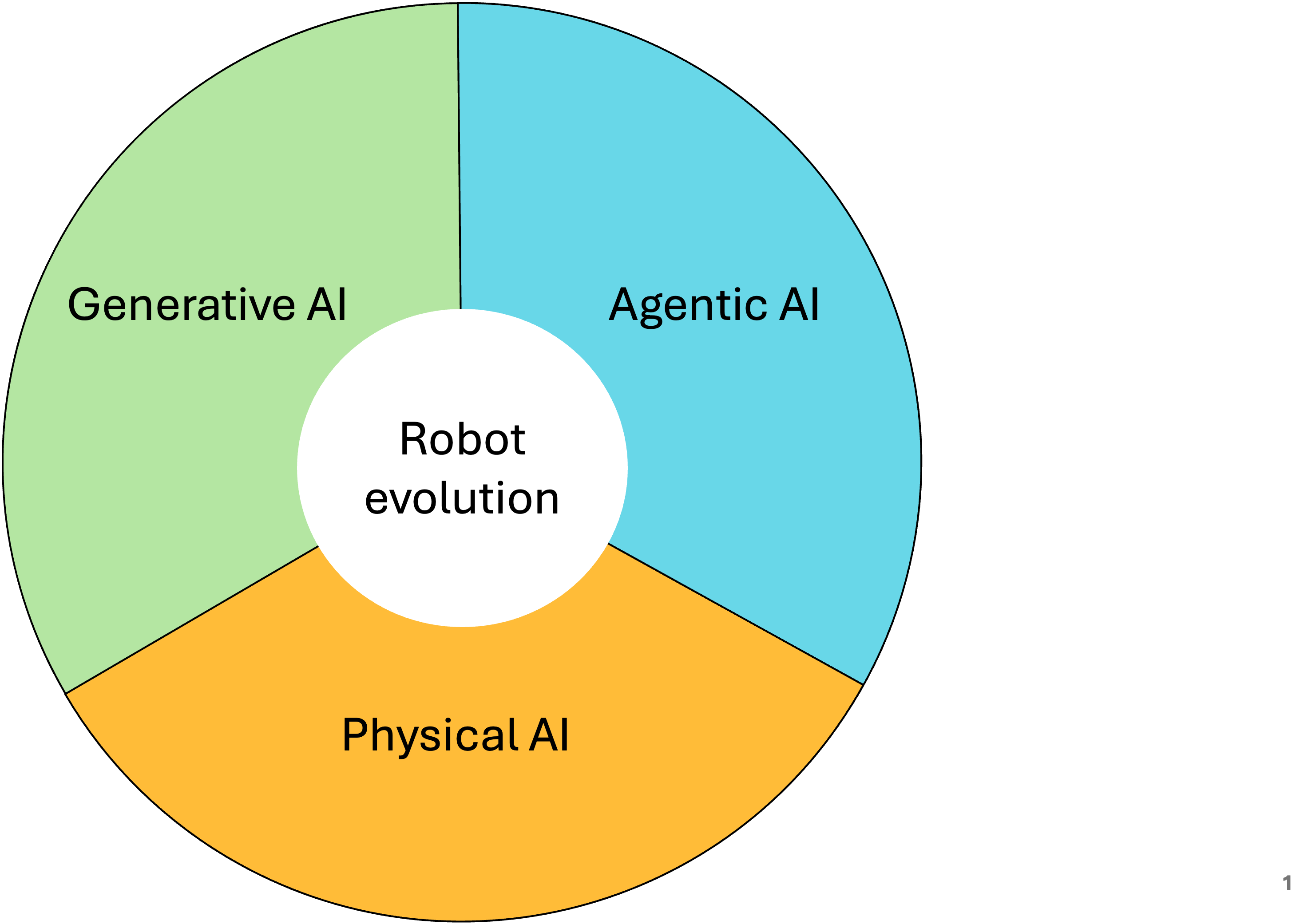
Three waves are reshaping AI: generative, agentic, and physical. Robot evolution draws on all of them at once; it generates morphologies and controllers, gives robots agency over their own behaviour, and is ultimately grounded in the physics of the real world.

2022 →

Generative AI

Cognitive and creative capabilities now widely taken for granted. In robot evolution: the engine that proposes new morphologies and controllers.

2026 →

Agentic AI

Autonomous, goal-directed action by digital agents. In robot evolution: the robots have agency and autonomy, their behaviour determines their fitness.

soon

Physical AI

Intelligence in physically embodied systems that interact with their surroundings. In robot evolution: robots 'live' in an environment where the laws of physics determine the results of the robots' actions. This holds even if the environment is only simulated.
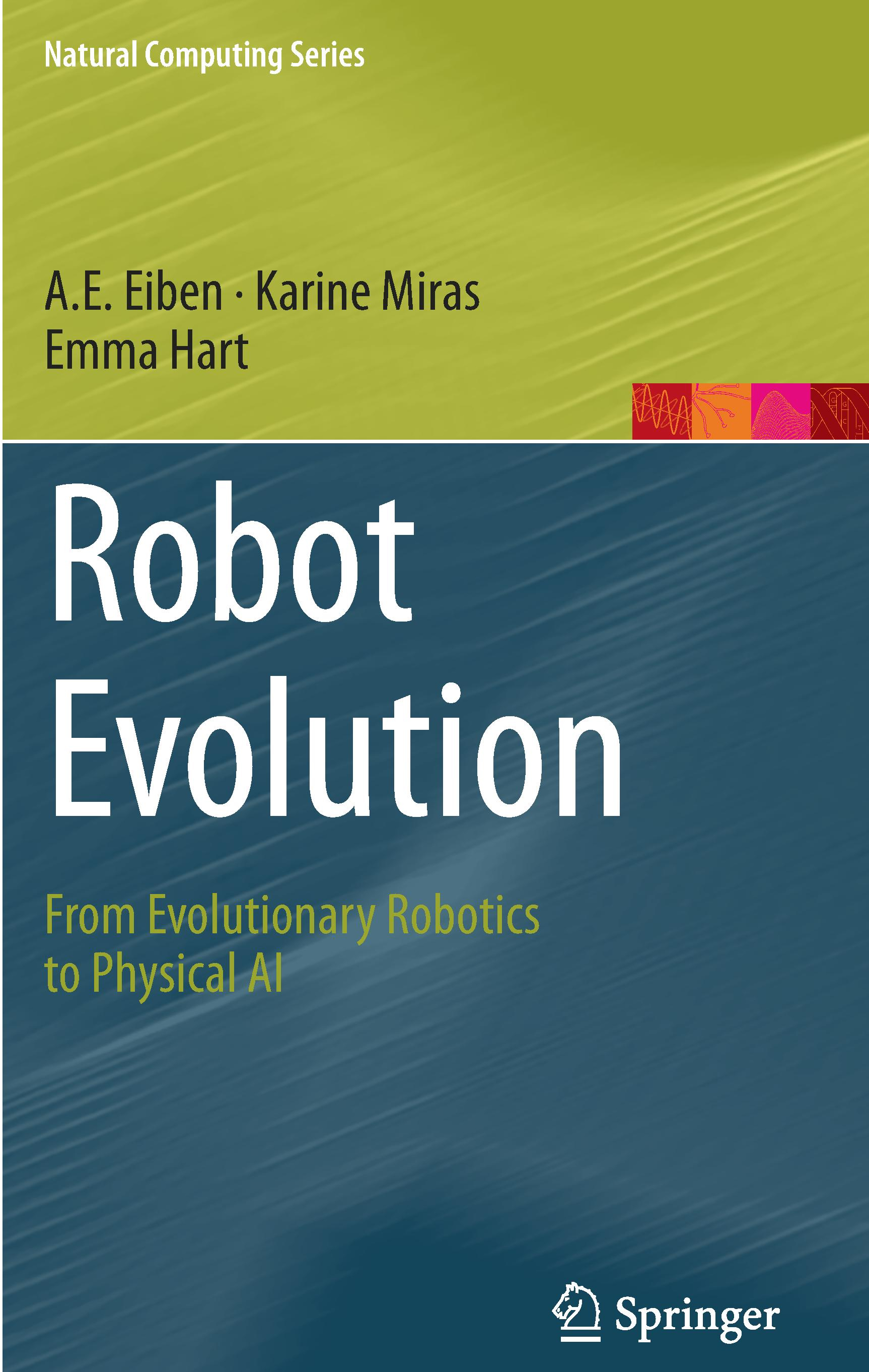
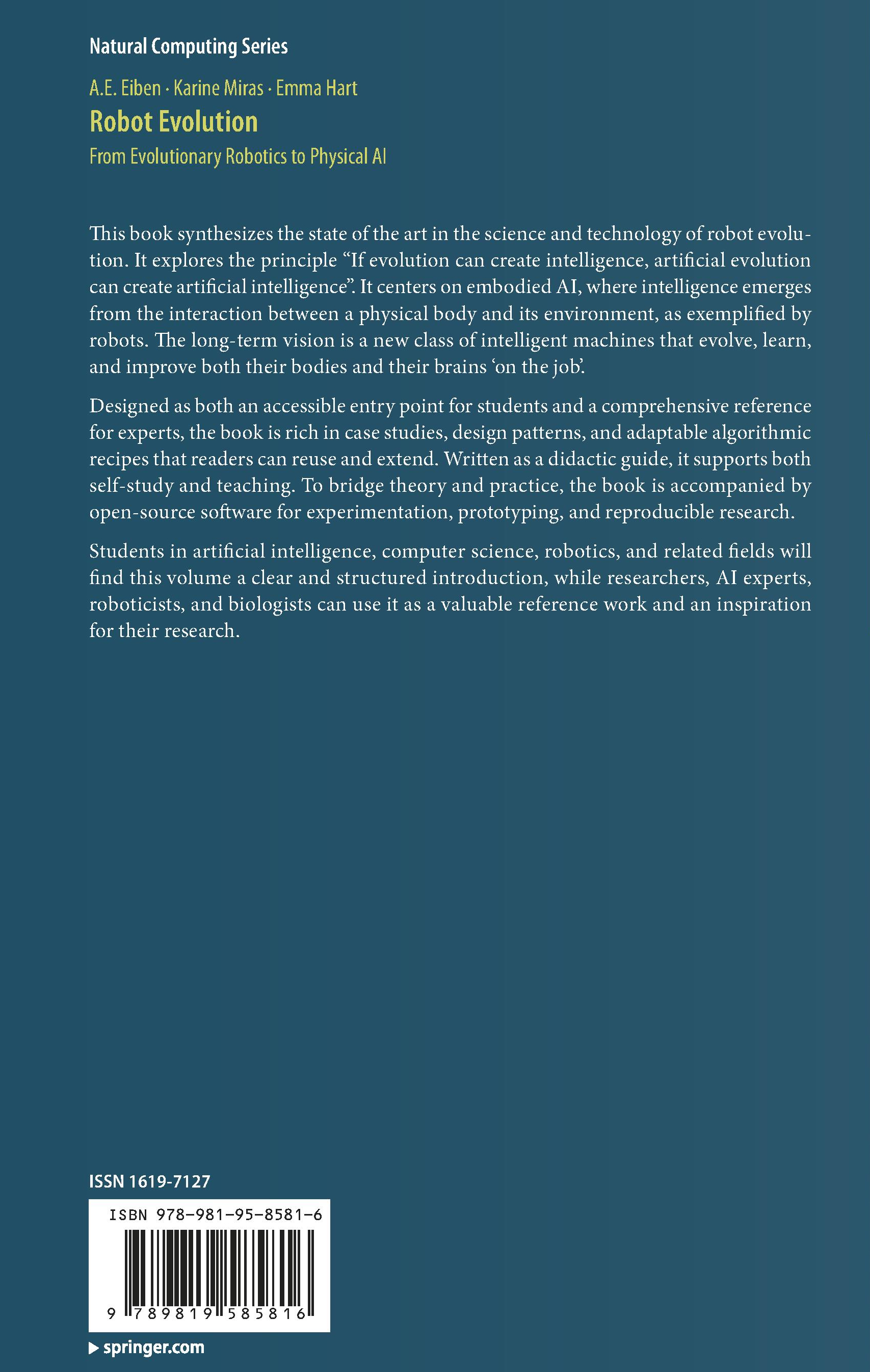
Table of contents

Twelve chapters across three connected parts

Part I
Background
  • 01Robots
  • 02Natural Evolution
  • 03Digital Evolution — Evolutionary Computing
  • 04Highlights of Evolutionary Robotics History
Part II
The Art of Robot Evolution
  • 05Evolutionary Robotics — the Basics
  • 06Evolving robot brains
  • 07Evolving robot brains and bodies in tandem
  • 08Evolving bodies and brains with learning
  • 09Environmental Influences and Developmental Mechanisms
Part III
Looking ahead
  • 10Physical Robot Evolution
  • 11Outlook
  • 12Afterword
  • AAppendix — List of key takeaways
Who is it for?

For students, academics, robotics engineers, and biologists

Students

For Bachelor, Master, and PhD students in AI, computer science, robotics, or related fields — an accessible entry point with worked examples.

AI experts & practitioners

For those looking to bring the latest techniques in generative AI, evolutionary algorithms, and machine learning to embodied, adaptive and intelligent systems.

Roboticists

For engineers and researchers building autonomous systems — a new perspective on design, adaptation, and physical intelligence.

Biologists & life scientists

Evolving robot populations as a controllable research platform to gain new insights into evolution and embodied behaviour.

The authors

Three authors, one vision

Karine Miras
Vrije Universiteit Amsterdam

Researcher at the intersection of evolutionary robotics, morphological intelligence, and the interplay between body, brain, and environment.

ARIEL logo
Companion software

ARIEL Autonomous Robots through Integrated Evolution and Learning

A modular, extendable, open-source framework that lets you evolve and train robots — bodies, brains, and behaviour — in simulation and on real hardware.

  • Modular architecture for morphologies, controllers, and environments
  • Supports joint evolution of body and brain with optional lifetime learning
  • Includes a broad suite of evolutionary and learning algorithms out of the box
  • Provides a bridge between simulation and physical robots
  • Contains code examples aligned with book chapters
Get the book

Available from Springer in the Natural Computing Series. Hardcover, paperback, and ebook editions.